The “No More Fun” Myth: Navigating NDIS Community Participation in 2026
The Scene
You want to join a local art class, hit the gym, or simply go out for coffee with a friend in Melbourne’s South East.
You log onto an NDIS Facebook group and see posts claiming, “The NDIA has stopped funding all social outings.”
You think, “I guess I’m stuck at home now. The NDIS won’t let me do anything fun.”
Think again.
Welcome to 2026. The NDIS hasn’t cancelled your social life; they have simply clarified how it is funded.
Here is the truth about what Social & Community Participation really looks like in Victoria today, and how you can still get out and about.
1. The “Cancelled Hobbies” Myth
Over the last year, panic spread that the NDIS was banning funding for social activities to save money.
The 2026 Reality: The NDIA still heavily funds community access, but they have drawn a strict line between “support costs” and “everyday living costs”.
The NDIS will pay for the support worker to drive you, assist you with personal care, and accompany you to the footy game or the Cranbourne botanical gardens. What they won’t pay for is the actual entry ticket or the pie you eat at half-time.
2. The “Group Program” Trap
Previously, many participants were lumped into generic, crowded “day programs” that they didn’t actually enjoy.
The 2026 Reality: You have Choice and Control. We believe everyone deserves a life full of variety. If you hate crowded rooms, you don’t have to go. Whether you want one-on-one support to join a photography walk, attend a music class in Frankston, or volunteer at a local animal shelter, your funding should follow your specific interests.
3. The Two Types of Funding (Core vs. Capacity Building)
Understanding your plan budget is the secret to unlocking your community access.
The “Doing” Support (Core): This covers the cost of a support worker accompanying you to social activities right now.
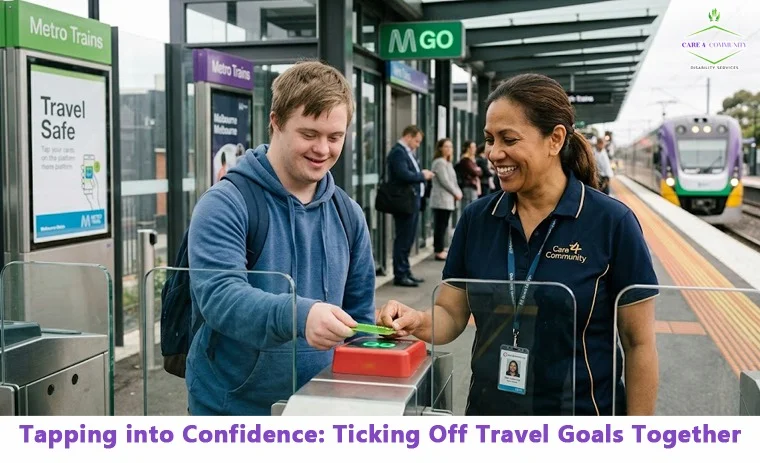
The “Learning” Support (Capacity Building): This is where the real growth happens. This funds mentoring to help you build skills—like learning to use a Myki card on public transport, or emotional regulation coaching to manage social anxiety, so you can eventually go out independently.
4. The Hidden Traps: The Goal-Setting Requirement
The biggest trap causing community access claims to fail in 2026 is poorly written NDIS goals.
If your NDIS plan does not explicitly list “increasing social participation,” “building community connections,” or “improving physical health” as a primary goal, the NDIA will reject your funding requests for these activities.
The Verdict
Getting out of the house isn’t a luxury; it is vital for your mental health and combating isolation. But because the NDIA is cracking down on generic “lifestyle” claims, you need a provider who understands how to align your activities perfectly with your NDIS goals.
Our Advice:
1. Review Your Goals: Before your next plan meeting, ensure you have a specific goal related to joining the community or building social skills.
2. Understand the Split: Always remember: NDIS pays for the support, you pay for the activity (like entry fees or food).
3. Choose Local Experts: Pick a provider whose staff actually know the local South East Melbourne area—the best accessible parks, the quietest cafes, and the most welcoming community hubs.
At Care 4 Community, our support workers are more than just drivers; they are companions. We co-design your weekly schedule based on your passions, not a generic timetable.
Tired of being stuck at home? Let’s find the activities that light you up. Contact our support team today.