How Community Participation Helps People with Disabilities Build Confidence Faster
The Scene
You watch your loved one sit by the window, watching the neighborhood go by.
They want to join the local art class, go to the footy, or simply grab a coffee down the street. But the thought of navigating public transport, dealing with crowds, or interacting with strangers feels entirely overwhelming.
It is often easier to just stay home, safe and isolated.
You think, “If they could just get out there, they would realize how capable they actually are.”
Take a breath. Confidence isn’t built overnight, but it can be built safely.
Welcome to 2026. Under the NDIS, Community Participation is no longer just about “getting out of the house.” It is a highly structured, capacity-building tool designed to help participants overcome social anxiety and build real-world independence at their own pace.
Here is the truth about how community participation works in Victoria today, and why it is the fastest way to build lasting confidence.
1. The “Just Go Out” Myth
Many well-meaning friends suggest that participants just need to “push themselves” to go to a busy shopping center to get over their nerves.
The 2026 Reality: Pushing someone into an unpredictable environment without proper support often causes severe anxiety, making them retreat further. True confidence is built through guided, step-by-step exposure. With a dedicated Care 4 Community support worker by their side, a participant can explore local venues in Cranbourne or Frankston safely, knowing they have a trusted professional to help them navigate any overwhelming moments.
2. The “Social Only” Misconception
People often assume that community participation funding is just for going to the movies or having lunch.
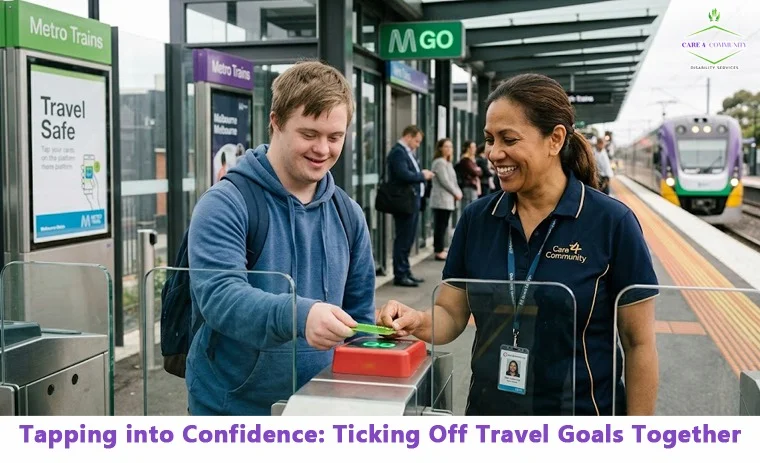
The 2026 Reality: While having fun is important, community access is a powerful capacity-building exercise. A simple trip to a cafe involves travel training (using a Myki card safely), financial literacy (budgeting and paying for the coffee), and social communication (ordering and speaking with staff). Every single outing is a practical lesson in independent living.
3. Overcoming the “Fear of the Unknown”
For many people with disabilities, the biggest barrier to leaving the house is the fear of unpredictable situations, such as a delayed train or a crowded room.
The 2026 Reality: A matched support worker acts as a personal safety net. By practicing real-life scenarios together, participants learn how to problem-solve on the go. Over time, the fear of the unknown shrinks, and they realize they have the capability to handle unexpected challenges safely.
4. The Hidden Traps: Misaligned Goals
A common trap families face is using their flexible Core funding for random outings that don’t actually build long-term skills.
The Solution: To see a dramatic improvement in confidence, community activities must be aligned with specific NDIS goals. Whether the goal is “joining a local hobby group” or “learning to navigate South East Melbourne independently,” having a targeted plan ensures that every hour of support funding is working toward a brighter, more connected future.
The Verdict
Isolation is the enemy of confidence. When participants are given the right support to engage with their community, they don’t just make friends—they discover their own capabilities and self-worth.
Our Advice:
- Start Small: Do not rush into crowded, high-stress environments. Begin with quiet, familiar places, like a local park or a small community library, and build up slowly.
- Follow Their Passion: Confidence grows fastest when a person is doing something they love. If they love animals, use funding to support volunteering at a local shelter.
- Prioritize Consistency: Ensure your provider sends the same support worker every week. Familiarity builds trust, and trust is required to step out of the comfort zone safely.
At Care 4 Community, our compassionate support workers specialize in helping participants across South East Melbourne break the cycle of isolation. We provide the steady, encouraging guidance needed to help your loved one confidently engage with the world around them.
Ready to help your loved one build their confidence in the community? Contact our expert team to explore your support options today.