Why Families Are Prioritizing Community-Based Disability Support in 2026
The Scene
You look at your loved one’s weekly schedule. Their physical needs are being met—the house is clean, meals are prepped, and they are safe.
But when the weekend rolls around, they are just sitting on the couch, scrolling through a tablet or watching TV. They have a care team, but they don’t have a social circle.
You think, “We spent all this time getting their clinical support right, but they are still completely isolated from the real world. Is this all there is?”
Take a breath. Surviving is not the same as living.
Welcome to 2026. Families across Australia are realizing that the old model of disability care—keeping people safe but hidden away at home or in crowded day centers—is entirely outdated. The new focus is firmly on genuine social inclusion.
Here is the truth about why families in Victoria are aggressively prioritizing community-based disability support, and how it transforms daily existence into a vibrant, connected life.
1. The “Segregated Facility” Myth
For years, community access often meant putting twenty participants onto a mini-bus and taking them to a segregated day program to do generic craft activities, separated from the general public.
The 2026 Reality: Families are rejecting the “one-size-fits-all” day centers. Today, community-based support is hyper-personalized and integrated into the mainstream world. If your loved one is passionate about photography, their support worker helps them join a local camera club in Frankston. If they love sports, they are supported to attend footy matches or join an inclusive league in Cranbourne. It is about accessing the actual community, not a facility.
2. The “Just Going Out” Misconception
There is a profound difference between simply being outdoors and actually belonging to a neighborhood.
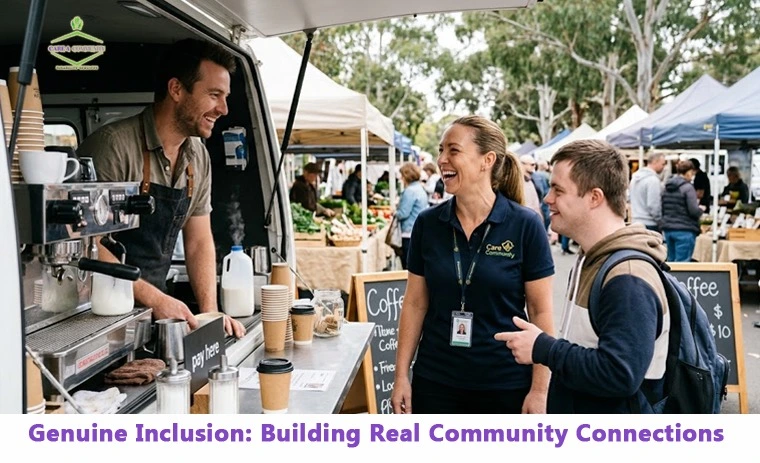
The 2026 Reality: Going to a busy shopping center to walk around aimlessly is a task, not true inclusion. Community-based support focuses on building genuine roots. It means your loved one gets to know the local barista, volunteers at a community garden, or becomes a “regular” at a neighborhood hub. These consistent local interactions build a natural, informal safety net and foster a deep sense of belonging.
3. The Mental Health Breakthrough
Families have witnessed firsthand the severe mental health toll that social isolation takes, often leading to depression, anxiety, and behavioral regression.
The 2026 Reality: Active community engagement is the ultimate antidote to isolation. When participants feel like they are valued members of a local group, their self-esteem skyrockets. Families are prioritizing this support because a socially connected participant is a happier, vastly more resilient participant.
4. The Hidden Traps: The “Taxi Service” Provider
A major trap families fall into is hiring a provider who claims to offer community access, but essentially acts as a glorified driver.
The Solution: True community-based support requires “Active Support.” If a worker drives your loved one to a cafe but does all the ordering and paying for them, no growth is happening. You must partner with a provider whose staff are trained to step back, facilitate social interactions, and empower the participant to take the lead in their own community.
The Verdict
Having a clean house and managed medications is the baseline of care. But true quality of life is found in friendships, hobbies, and a sense of belonging in your local neighborhood.
Our Advice:
- Demand Local Knowledge: When interviewing providers, ask them about specific accessible venues in your suburb. Your provider must be deeply embedded in the local community, not just operating from a generic corporate desk.
- Review the NDIS Goals: Ensure your plan explicitly lists goals like “building social networks,” “engaging in civic activities,” or “joining mainstream recreational groups” to unlock this specific funding.
- Follow the Passion: Stop forcing activities just to get out of the house. Build a community schedule entirely around what makes your loved one light up.
At Care 4 Community, we don’t just work in South East Melbourne—we are part of it. Our dedicated, local support workers know the best inclusive community programs, the quietest cafes, and the most welcoming local clubs, ensuring your loved one finds their true place in the world.
Ready to break out of the bubble and build real connections? Contact our local team to explore community-based support today.