The “Passive Care” Trap: Unlocking Independence with NDIS Daily Living
The Scene
You want to learn how to cook your own meals, manage your weekly budget, and handle your daily routine without constantly asking for help.
But your current support worker just comes in, cooks the food, cleans the kitchen, and heads out the door.
You sit there and think, “I am never going to learn how to do this myself. I’m stuck relying on a carer forever.”
Take a breath. It doesn’t have to be this way.
Welcome to 2026. The NDIS landscape has shifted away from passive, “done-for-you” care and is focusing heavily on genuine capacity building and autonomy.
Here is the truth about Assistance with Daily Living in Victoria today, and how the right support can completely change your life.
1. The “Done For You” Myth
Historically, disability support was often just about getting the chores done as quickly as possible.
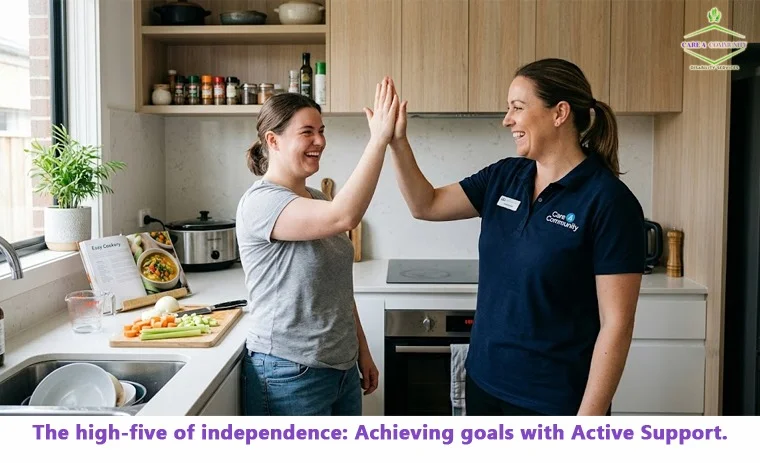
The 2026 Reality: True independence isn’t just about getting things done – it’s about having the confidence to do them yourself. At Care 4 Community, we operate on an “Active Support” model. This means we don’t just come in and take over. We work alongside you, breaking tasks down into manageable steps so you can learn at your own pace.
2. The “Physical Skills Only” Misconception
Many participants think daily living support only covers showering and cooking.
The 2026 Reality: Running your own life requires more than just physical skills. We take a holistic approach. Our programs include Digital Skills (like using computers safely and making online appointments), as well as Emotional Wellbeing (learning stress management and how to navigate social interactions).
3. The “One Size Fits All” Trap
Some agencies force participants into rigid schedules that suit the provider’s roster, not the individual’s life.
The 2026 Reality: Your life, your schedule. Whether you need support for morning routines, school transitions, or weekend socializing across Cranbourne, Frankston, and Clyde, the support must be tailored to match your specific NDIS goals.
4. The Hidden Traps: Financial Vulnerability
A lack of financial literacy is one of the biggest barriers to living independently.
The Solution: A quality daily living program must include hands-on training in financial literacy. We teach you how to budget for your weekly groceries, handle money safely, and pay bills on time so you can manage your household autonomously.
The Verdict
Assistance with Daily Living isn’t just a helping hand; it’s a pathway to self-sufficiency. If your provider is only doing tasks for you, they are hindering your long-term growth.
Our Advice:
Demand Active Support: Ask your provider to explain their process. They should focus on “doing with you, not just for you.”
Set Holistic Goals: Ensure your NDIS plan includes goals for problem-solving and communication, not just physical chores.
Focus on the Future: Treat every daily task as a training opportunity to reduce your reliance on carers over time.
At Care 4 Community, we provide the right mix of support and skill development so you can live the life you choose.
Ready to level up your independence? Let’s work together to build the skills you need. Contact our intake team today.