Why Some NDIS Participants Get Better Results Than Others
The Scene
You might meet another family navigating the NDIS and notice how much progress they are making. Their loved one is learning to cook, gaining confidence on public transport, and actively engaging in local community groups.
Meanwhile, you look at your own funding and feel like things are at a standstill. The support workers arrive, the chores get done, but there is no real momentum or growth.
You wonder, “Are they getting more funding than us? What is the secret?”
Take a breath. The difference is rarely about the dollar amount in the budget. It is entirely about how that funding is deployed.
Welcome to 2026. The NDIS is shifting heavily toward measurable outcomes and functional capacity. Getting the best possible results requires a strategic approach to daily support.
Here is the truth about why some NDIS plans thrive in Victoria today, and practical next steps to optimize your own results.
1. The “Passive Care” Trap
A major reason plans stagnate is the reliance on passive support, where a worker simply completes tasks on the participant’s behalf.
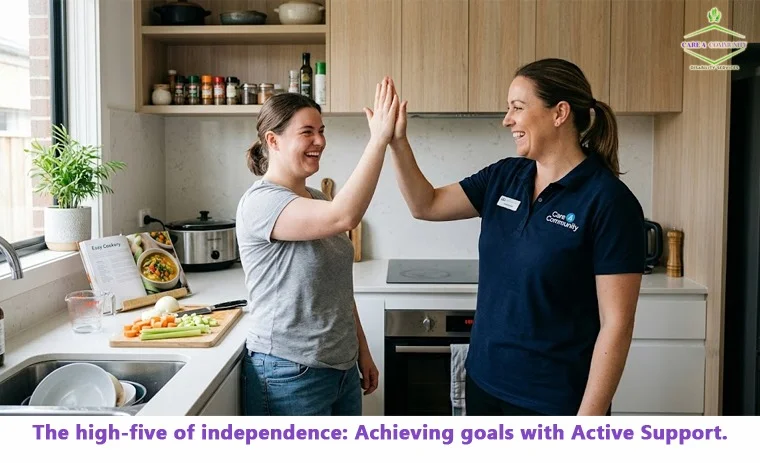
The 2026 Reality: Participants who see dramatic improvements utilize an “Active Support” model. Instead of having a worker quickly clean the kitchen or make a meal, Active Support means the worker mentors the participant through the task. This hands-on, collaborative approach transforms routine chores into daily capacity-building exercises, steadily building lifelong skills.
2. The Vague Goal Problem
When goals are too broad—such as “I want to be more independent”—it becomes difficult for the NDIA to measure progress or fund specific services.
The 2026 Reality: High-achieving participants break their broad aspirations down into specific, actionable steps. Instead of “being independent,” a highly effective goal reads: “I want to learn how to safely navigate the bus route to the local library in Frankston.” Specific goals ensure that every dollar of funding is directly tied to a tangible outcome, making it much easier to justify at the next plan review.
3. The “Set and Forget” Mistake
Many families breathe a sigh of relief once the plan is approved, leaving it untouched for months and sticking to the exact same routine.
The 2026 Reality: Optimizing NDIS plan results requires active management. If a therapy or support strategy isn’t working after a few months, successful participants pivot quickly. They use their flexible budgets to trial new community access programs or adjust their support hours to better match their evolving needs throughout the year.
4. The Hidden Traps: The Provider Alignment Gap
The fastest way to stall progress is partnering with a provider who doesn’t understand your specific long-term vision.
The Solution: Providers are not all the same. Participants get the best results when they choose a care team that is deeply aligned with their goals. A premium provider will actively track daily progress, adjust their mentoring style, and provide the clinical evidence needed to prove that your functional capacity is actually improving.
The Verdict
An NDIS plan is a tool, not a magic wand. Without strategic goal setting, active support, and an aligned provider, even the best-funded plans can fall flat.
Our Advice:
- Review Your Goals: Take a look at your current plan. Are the goals specific and actionable? Families may find it helpful to rewrite their daily routines to align with these targets.
- Demand Active Support: Have a conversation with your current support team. Ensure they are focused on building skills rather than just completing tasks.
- Track the Wins: Common things to check include whether your provider is documenting small, daily victories. This data is vital for proving progress at your next review.
At Care 4 Community, we are laser-focused on NDIS participant outcomes. Our dedicated teams across South East Melbourne provide the mentoring, active support, and strategic guidance required to turn your funding into real-world independence.
Looking to get better results from your current plan? Contact our intake team to explore your support options today.